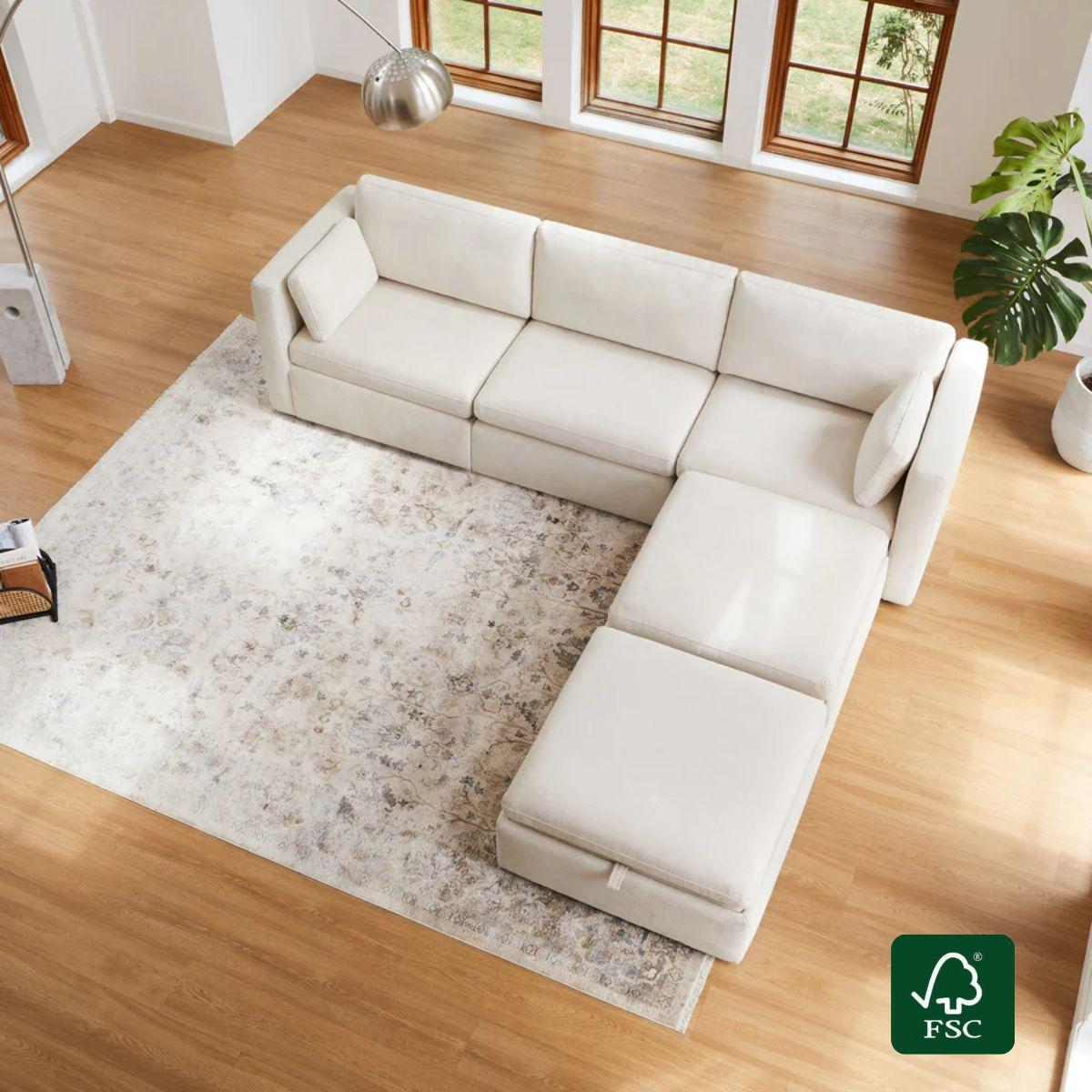
Most living rooms are not short on furniture ideas; they are short on usable floor space. An L shaped couch turns an awkward corner into the most comfortable seat in the house, and it gives several people room to stretch out without pushing three separate pieces against the walls. The catch is that a sectional rewards planning. Chosen on impulse, it can swallow a walkway, crowd a window, or leave the room feeling lopsided. Chosen with care, it becomes the anchor that makes the entire layout feel intentional.
This guide walks through the decisions that matter most: measuring the footprint before you buy, choosing a corner orientation that matches the room, judging comfort beyond the showroom test, and arranging the space so the shape works for movie nights, lazy mornings, and everyday traffic. None of it requires a designer’s eye, just a tape measure, a little patience, and a clear sense of how the room is actually used.
Start With the Room, Not the Couch
Before you look at a single model, spend twenty minutes with a tape measure and a roll of painter’s tape. Mark the full footprint of the l shaped couch you are considering, including the chaise or the short return arm. Then walk the room as you normally would, from the front door past the kitchen toward the window, and notice where the tape gets in your way. That is the space a real couch would claim every day, and it is usually more than a floor plan suggests.
Leave roughly eighteen inches between the seat edge and the coffee table so legs have somewhere to go, and keep main walkways closer to three feet if two people need to pass comfortably. Check that the return arm does not block a doorway, a radiator, or the path to a balcony. Also measure the delivery route: stair turns, hallway width, and elevator doors decide whether a large piece can enter the building at all, and a couch that cannot make the final turn is a problem no return policy solves gracefully.
Corner availability matters as much as room size. A sectional needs two walls, or one wall plus a clear sightline, to feel natural. Wedged into a single awkward nook, it looks heavy and makes the room feel smaller than it is. Note where the room’s true corner sits and whether a window, fireplace, or built-in interrupts it, because the corner determines where the long run of seating can go.
Finally, think about height. A low, deep sectional can make a tall room feel grounded and generous, while a bulky high-backed piece in a compact apartment can feel oppressive. Brands such as CHITA LIVING design sectionals around these proportions, keeping the corner scaled to real apartments and family rooms rather than showroom floors.
Choosing the Right Corner and Orientation
Orientation is the most common source of returns. Facing the couch from the front, a left-facing sectional has its chaise on your left; a right-facing model mirrors it. The correct choice depends on the room, not on preference alone. Decide which side needs the long run of seating and which side needs the open end, then walk your normal route into the room. If the main entrance is on the left, a left-facing chaise can quietly block the flow every single day.
Chaise or Return Arm?
A chaise adds a lounge zone for one person and visually softens the corner, but it takes up more depth and invites people to recline rather than sit upright. A return arm, a shorter section that turns the corner without extending far into the room, keeps the layout airier and seats more people comfortably. In open-plan spaces the return arm usually wins; in a dedicated media room the chaise earns its space.
Match the Shape to the Traffic
Think about how many people cross the room each day. A sectional placed with its back to a walkway creates a natural boundary between living and dining zones, which is useful in open layouts. Placed with its open end toward the busiest path, it invites people to cut through the seating area. Neither arrangement is wrong; one simply fits the household’s habits better, and that fit is worth more than any styling photo.
Comfort That Holds Up Over Time
Showroom comfort is a five-minute impression. Real comfort is what the couch feels like after a year of nightly use, and it comes down to seat depth, cushion fill, and frame construction. Sit for at least ten minutes in the position you actually use at home, feet up and laptop balanced, rather than perching on the edge for a quick photo. If the seat feels wrong after ten minutes, it will feel worse after ten months.
Cushion Fill and Support
High-resilience foam holds its shape and suits households that use the couch daily. Feather-and-foam blends feel plusher but need regular fluffing and occasional rotation to avoid flat spots. Ask how the cushions are built: wrapped cores and removable covers extend the useful life of a piece considerably, and zippered covers turn cleaning from an aspiration into something you might actually do.
Fabric for Real Households
Light colors make a corner feel larger, but they also show every crumb. Performance weaves, tightly woven chenille, and treated linens handle spills better than loose natural fibers. If pets share the couch, look for tight weaves that resist snags and avoid fabrics with a visible loop texture. Sunlight is the other silent factor: west-facing rooms fade strong colors faster, so neutrals age more gracefully over the years.
Layouts That Make the Shape Work
A sectional is only as good as the room around it. Ground the seating with a rug large enough that the front legs of every section sit on it; a rug that stops mid-couch makes the arrangement look unfinished. Keep the coffee table proportional, roughly two-thirds the length of the main seating run, and leave breathing room at the open end so the shape reads as deliberate rather than cramped.
In open-plan rooms, float the couch away from the wall to define the living zone, then place a slim console behind it for lamps and books. In smaller rooms, keep the long side against a wall and let the return arm mark the boundary. Lighting deserves the same attention: a floor lamp near the corner fills the one spot overhead lights usually miss, and a small side table at the open end gives drinks a home without cluttering the floor.
Pay attention to the strongest sightline. If the couch faces a television, center the screen on the long section rather than the whole room, so everyone seated along the run has a comfortable angle. If it faces a fireplace or a view, arrange the seating so the focal point stays visible from both legs of the L. The open end is the natural place for a plant, a slim bookcase, or a basket that holds blankets, because it finishes the shape without shutting it in.
Rug placement is where many promising layouts fall apart. Choose a rug that is large enough for the front legs of every section to rest on it, and let it run at least a foot past the chaise so the seating reads as one zone. Layering a smaller textured rug at an angle can add depth, but only when the base rug is big enough to keep the arrangement coherent.
Making the Corner Work for You
An L shaped couch is one of the few pieces of furniture that can make a room feel both larger and more comfortable at the same time, but only when it is chosen for the space it will live in. Measure the footprint, test the walkways, and decide the orientation before you fall for a fabric. Then judge comfort the way you will actually use it, and arrange the surrounding pieces so the corner feels intentional.
A little maintenance keeps the shape looking considered. Rotate the seat cushions every week or two, vacuum under them monthly, and plump the back cushions as part of a weekend routine. If the covers are removable, follow the cleaning instructions rather than guessing, and treat any spill from the outside edge inward so it does not spread. These habits take minutes and visibly extend the useful life of the upholstery.
Get those steps right, and the couch stops being a large object in the room and becomes the place where the household naturally gathers. That is the real test of a sectional: not how it photographs on day one, but how often everyone gravitates toward it six months later.
